
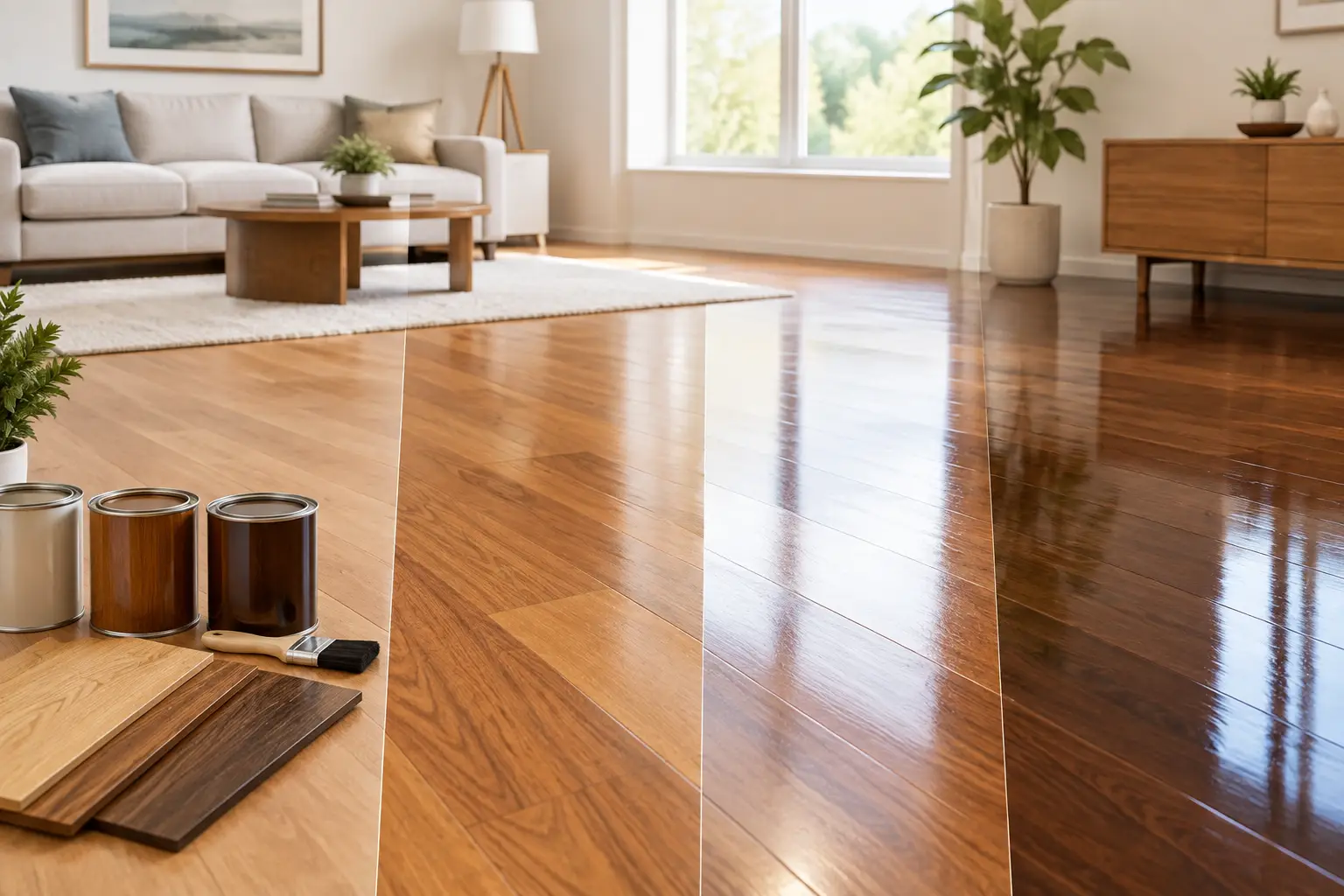
A newly sanded hardwood floor can look nearly flawless before a finish coat ever touches it. The finish is what determines whether that floor still looks good after chair legs, wet boots, pets, sunlight, and daily living take their turn. The best finish for hardwood floors is not one universal product. It is the finish system that suits the wood, the room, the desired appearance, and the level of maintenance the owner is willing to accept.
For many Maryland and Washington, DC-area homes, a professional-grade waterborne polyurethane in a satin sheen is the most practical choice. It dries quickly, keeps the wood color relatively natural, produces low odor, and holds up well in active households. But that recommendation changes when preserving an older floor’s amber character, matching existing flooring, or restoring a historic home where a more traditional appearance matters.
What Determines the Best Finish for Hardwood Floors?
A floor finish should be chosen after the floor itself is evaluated, not from a sample board alone. Oak, maple, hickory, walnut, pine, and engineered hardwood can each respond differently to stain, sanding, and finish. Existing repairs, uneven color, pet stains, water damage, and old wax or coating residue can also affect the result.
Traffic is the first practical consideration. A quiet upstairs bedroom does not need the same protection as a kitchen, entryway, stair landing, retail space, or family room with large dogs. Higher-use areas benefit from a finish with strong abrasion resistance and a properly prepared surface beneath it. No topcoat can make up for poor sanding, skipped grits, weak repairs, or an uneven final coat.
Appearance matters just as much. Some homeowners want the clean, pale look of white oak with almost no ambering. Others want red oak or pine to develop the warmer tone associated with older homes. The final decision also involves sheen. Matte hides scratches and dust well, satin offers a balanced low-luster look, semi-gloss reflects more light but makes surface wear easier to notice, and gloss is usually reserved for clients who want a highly formal appearance and accept more frequent cleaning.
Waterborne Polyurethane: The Leading Choice for Most Homes
Waterborne polyurethane is often the best all-around hardwood floor finish for occupied homes. It dries faster than traditional oil-based polyurethane, has a milder odor, and allows a professional crew to complete multiple coats with less downtime. That makes it especially useful for homeowners coordinating a renovation, move-in date, or furniture delivery.
High-quality waterborne systems are durable enough for busy living areas when applied over professionally sanded and prepared wood. They also resist yellowing better than oil-based finishes, helping preserve the natural look of white oak, maple, ash, and many lighter custom stains. For clients who want a contemporary finish without a plastic-looking shine, a satin or matte waterborne topcoat is usually a strong fit.
The trade-off is color. A waterborne finish does not naturally add the same warmth that oil-based polyurethane brings to wood. On red oak, white oak, or older flooring with exposed repairs, that difference can be significant. A custom stain, waterborne sealer, or specialized color process may be needed to achieve the depth a homeowner expects. Product selection should always be tested on the actual floor, especially when matching adjacent rooms or existing trim.
Oil-Based Polyurethane: Warm Color With Longer Drying Time
Oil-based polyurethane remains a valid option for homeowners who prefer a traditional hardwood appearance. It adds an amber tone that can enrich red oak, white oak, pine, and many older floors. That warmth is one reason oil-based finishes have been common in historic and traditional homes for decades.
It also provides dependable wear protection, but it comes with practical limitations. Oil-based finish dries and cures more slowly, carries a stronger odor, and can yellow further over time. The added amber tone may be desirable on a classic floor, yet it can make a cool stain look much warmer than intended. It is less ideal when a household needs to return to normal quickly or when a very light, natural wood color is the goal.
For a restoration-sensitive project, the right question is not whether oil-based is old-fashioned or waterborne is newer. The better question is whether the finish supports the home’s existing character while meeting the owner’s expectations for scheduling, odor, color, and maintenance.
Hardwax Oil: A Natural Look With a Different Maintenance Plan
Hardwax oil finishes create a lower-build, close-to-the-wood appearance that many design-conscious homeowners appreciate. Rather than forming the thicker film associated with polyurethane, hardwax oils penetrate and protect the wood while leaving a more natural texture and matte appearance. They can be an excellent option for white oak, wide-plank floors, and spaces where the goal is a refined European-style finish.
One advantage is spot repairability. In some cases, a worn or damaged section can be cleaned, lightly abraded, and refreshed without sanding the entire room. That can be attractive for homes with children, pets, or a kitchen floor that will see concentrated wear.
The trade-off is that hardwax oil should not be sold as maintenance-free. It needs the correct cleaning products and periodic care, and it may not be the right choice for every commercial setting or household. Water exposure still requires prompt attention. A professional should also confirm that the floor has been sanded and prepared for the specific oil system being used, since product compatibility and application technique matter.
Commercial and High-Traffic Spaces Need a Different Standard
A home office used by one person and a commercial office with daily foot traffic are not comparable projects. Commercial floors may need a higher-performance waterborne system, a catalyzed finish, or another coating selected for the conditions of that space. Entryways, restaurants, retail areas, and multi-unit common spaces may also require more frequent maintenance planning than residential floors.
Durability is not simply about choosing the hardest finish on a label. Surface preparation, the number of coats, cure time, cleaning practices, furniture protection, and moisture control all influence real-world performance. A finish that is excellent on a properly acclimated oak floor can fail prematurely if moisture is coming through a subfloor or if chairs are dragged across it without felt pads.
Finish, Stain, and Sheen Are Separate Decisions
These terms are often used interchangeably, but they do different jobs. Stain changes the color of the wood. Finish protects the wood. Sheen controls how much light reflects from the finished surface.
That distinction gives homeowners more control. You can choose a custom medium-brown stain with a waterborne finish, keep natural white oak with a matte hardwax oil, or use no stain at all and select an oil-based polyurethane for warmth. Each combination will look and wear differently.
Satin remains the most requested sheen because it balances elegance and practicality. It offers enough light reflection to show the floor’s grain without putting every scuff, dust particle, or shallow scratch on display. Matte is increasingly popular in open-concept homes and is forgiving in active rooms. Semi-gloss and gloss can be striking, but they require more consistent cleaning and are less forgiving of normal wear.
Preparation Is Part of the Finish Quality
The best product cannot produce its best result over a poorly prepared floor. Professional refinishing begins with an assessment of board condition, repairs, fasteners, gaps, stains, previous coatings, and moisture concerns. Sanding must be thorough and controlled so the floor is flat, smooth, and ready to receive stain or finish evenly.
Dust containment also matters. A dustless sanding process helps reduce airborne dust during the project and creates a cleaner environment for homeowners, though no sanding process is completely dust-free. Careful vacuuming, tack procedures, clean application tools, and appropriate drying conditions are what protect the final coat from debris and uneven texture.
Before approving a finish, ask to see samples on your own flooring whenever color is a major concern. Wood species, age, grain pattern, and prior sun exposure can make a sample board misleading. A test area gives you a more reliable view of the final tone, sheen, and grain definition under the lighting in your home.
A Practical Recommendation for Your Floor
For most residential refinishing projects, choose a premium waterborne polyurethane in satin or matte sheen when you want durable protection, lower odor, faster project timing, and a natural-looking color. Choose oil-based polyurethane when the warmer, traditional tone is part of the design goal and the longer drying schedule is acceptable. Consider hardwax oil when a natural matte appearance and the ability to refresh localized wear outweigh the need for a conventional film finish.
The strongest result comes from matching the finish to the floor rather than forcing the floor to fit a trend. Refinish My Floors approaches that decision through an on-site evaluation, sample-driven color planning, meticulous sanding, and finish application designed for the way the space will actually be used. A well-chosen finish should let the character of the wood show through while giving the owner confidence that the floor is ready for everyday life.

