
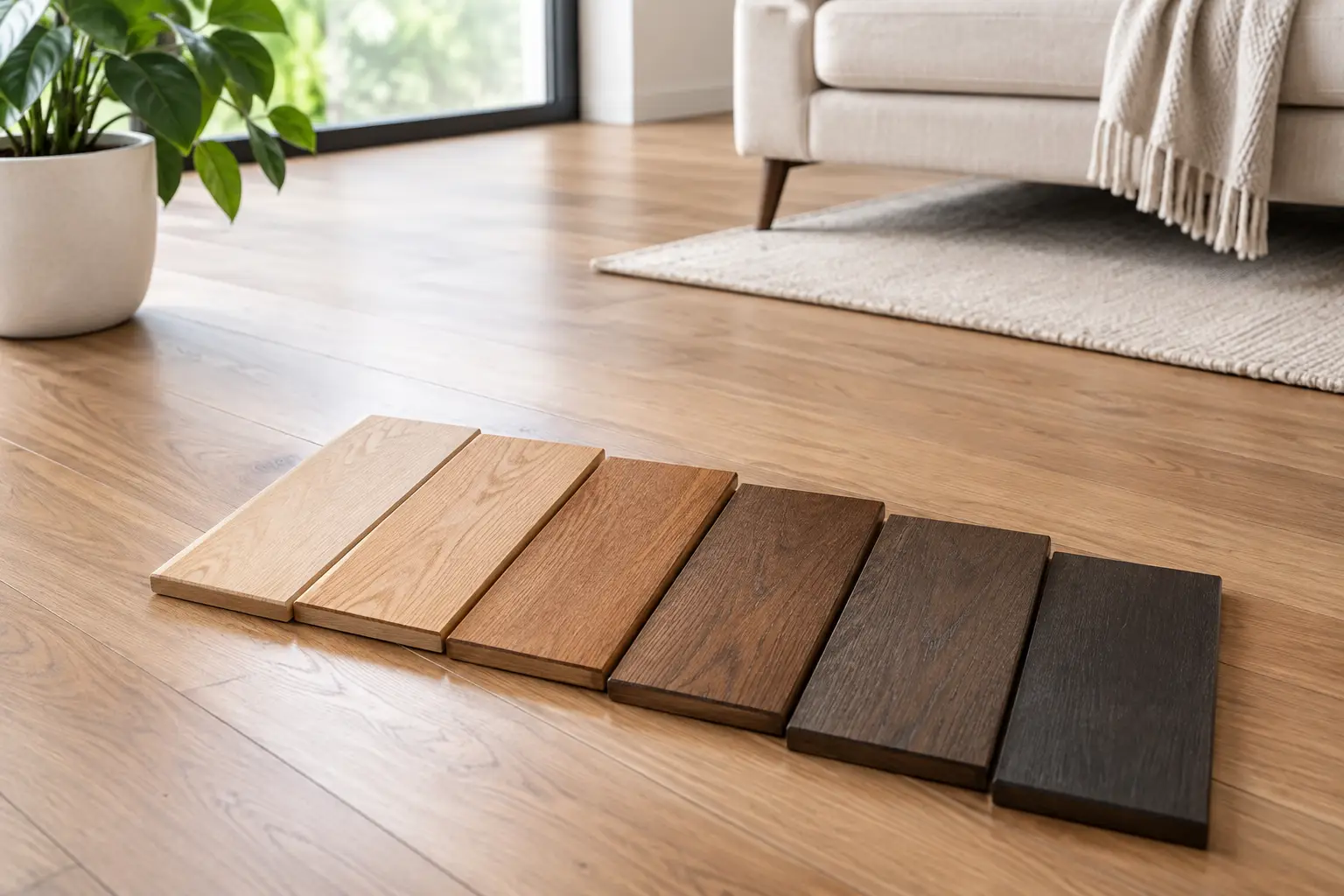
A stain sample can look perfect in a showroom and completely different across a sunlit Bethesda living room or a historic Silver Spring hallway. That is why custom hardwood floor stain colors should be developed on your actual floor, after the wood has been properly sanded. The goal is not simply to choose a fashionable brown, gray, or natural tone. It is to create a color that works with the species, light, layout, wear level, and character of your home.
For homeowners who are refinishing floors they plan to live with for years, custom color work provides far more control than selecting a standard stain from a chart. It also requires more preparation and judgment. Wood is not a blank canvas, and a good floor professional treats every board accordingly.
Why Custom Hardwood Floor Stain Colors Look Better
Factory color charts are useful starting points, but they cannot predict how stain will react to your floor. Red oak, white oak, maple, hickory, walnut, pine, and older reclaimed boards all absorb pigment differently. Even boards from the same original installation can vary because of grain density, age, prior sun exposure, water marks, old finishes, and past repairs.
A custom color lets you adjust for those variables. A warmer brown can soften the natural pink cast of red oak. A neutral blend can keep white oak from looking too yellow. A richer, more traditional tone can bring continuity to an older home without making the floor look artificially new. The difference is often subtle, but subtle adjustments are what make a floor feel intentional rather than merely stained.
Custom blending is especially valuable when a homeowner is trying to coordinate existing cabinetry, trim, stair treads, or an adjacent hardwood floor that will not be refinished. Matching does not always mean making every wood surface identical. It means creating a relationship that looks considered in the finished space.
Start With the Wood, Not the Color Trend
The first decision is wood species. White oak is often chosen for contemporary neutral stains because it accepts many tones with relatively even results. Red oak has a stronger open grain and natural warm undertone, which can be an advantage for classic medium-brown floors but needs thoughtful color correction when a cooler look is requested.
Maple is tighter grained and can stain unevenly, particularly with darker colors. Hickory has dramatic natural variation that remains visible under most stains. Pine and older softwood floors may absorb color quickly and reveal every repair or sanding inconsistency. A professional evaluation identifies these realities before a color is promised.
This is also where expectations matter. A very dark espresso stain may be technically possible on many floors, but it can emphasize scratches, dust, pet hair, and small gaps. A pale natural finish may make a room feel larger and brighter, yet it will not hide old water damage or mismatched replacement boards as easily as a mid-tone stain. The best color balances the look you want with the amount of variation and maintenance you are comfortable seeing.
Sanding Determines How the Stain Takes
Color work begins long before the stain is applied. Old polyurethane, wax, embedded dirt, adhesive residue, and uneven prior sanding can all interfere with absorption. If remnants of the previous finish remain in the grain, a new stain may look blotchy or take differently from board to board.
Proper sanding removes the old coating evenly while preserving the floor’s usable wear layer. The final sanding sequence matters as well. Sanding too coarsely can leave visible scratch patterns that become more noticeable after staining. Sanding too finely can reduce absorption on certain species. Edge work, corners, thresholds, and stair details must be brought into the same visual range as the field of the floor.
At Refinish My Floors, color selection is approached as part of the refinishing system, not as a last-minute finish choice. Thorough preparation, controlled sanding, and clean job-site practices give custom colors the consistent base they need. Dustless sanding also helps reduce airborne debris during a project, which is particularly helpful in occupied homes.
Test the Color Where You Will See It
A sample board is helpful, but a test area on the actual floor is better. After sanding, a flooring professional can create several sample patches in a location that receives representative light. Those samples should include the intended topcoat because sheen changes the final appearance. A satin finish can make a color feel softer and more natural, while a glossier finish reflects more light and may deepen the perceived tone.
Look at samples in the morning, afternoon, and evening. Observe them with window shades open and closed, then under your usual interior lighting. LED bulbs vary in warmth, and a color that looks neutral in daylight can lean gold, gray, or reddish after dark.
Do not choose from one small patch alone. Compare the sample against cabinets, wall paint, furniture, and trim. In open-concept homes, walk into adjoining rooms. A color that looks excellent near a bright kitchen may feel too dark in a low-light dining room. This is the moment to make adjustments, before the entire floor is stained.
Popular Directions for Custom Wood Floor Stain Colors
The right color is personal, but a few directions remain consistently practical for Maryland and Washington, DC-area homes.
Natural and light neutral finishes show the wood’s grain and work well with transitional, Scandinavian, and contemporary interiors. They can make smaller rooms feel more open, particularly on white oak. These finishes usually rely on a clear protective system or a lightly toned custom blend rather than a heavy pigment.
Medium warm browns remain one of the most dependable choices for family homes. They provide contrast with light walls, complement traditional millwork, and hide everyday dust better than very dark stains. A well-balanced medium brown can also help blend moderate variation in older red oak floors.
Neutralized brown and taupe tones can reduce orange or red undertones without pushing a floor into a flat gray appearance. This approach often gives a home an updated look while respecting the natural grain. It is generally more forgiving than a strongly gray stain, which can appear blue, green, or purple when it reacts with certain wood species.
Dark custom blends deliver drama and can suit formal dining rooms, restored historic interiors, and spaces with abundant natural light. They demand careful maintenance and very even sanding. Homeowners with large dogs, active children, or a preference for low-maintenance floors may be happier with a medium-to-dark brown that preserves depth without showing every mark.
Coordinate Stairs, Repairs, and Adjacent Flooring
Floor stain color becomes more complicated when stairs, handrails, replacement boards, or room additions are part of the project. Treads often contain a different cut of wood than the flooring, and handrails may have a separate species or older coating. They should be sampled and evaluated individually rather than assumed to match automatically.
Repairs deserve the same attention. New red oak boards beside decades-old red oak can accept stain differently because the older flooring has oxidized and changed color over time. A custom blend can reduce the contrast, but it cannot always erase it completely. An experienced contractor will explain where a close blend is realistic and where the repair may remain faintly visible.
For homes with a mix of existing wood floors and new installation, consistency often comes from choosing compatible undertones rather than chasing an exact stain match. A warm medium-brown floor in one area and a slightly lighter related tone in another can look more natural than forcing two different species into the same formula.
Protect the Color With the Right Finish
Stain creates color, but the finish protects it. The right topcoat affects durability, sheen, maintenance, and the way a custom blend reads in the room. Water-based finishes tend to keep wood lighter and clearer, while oil-based systems can add amber warmth over time. Neither is automatically better. The best choice depends on the look you want, the wood species, household use, drying schedule, and tolerance for odor.
For busy homes and commercial spaces, durability should be part of the color conversation. A beautiful custom stain needs a finish system that can stand up to foot traffic, moving furniture, and routine cleaning. Using the correct cleaners and adding felt pads under furniture will help preserve both the finish and the color beneath it.
A floor color should still feel right after the furniture changes, the walls are repainted, and sunlight shifts with the seasons. Take the time to test, compare, and choose a blend that respects the wood already in your home. That careful process is what turns a stain color into a floor you will be glad to walk on every day.

