
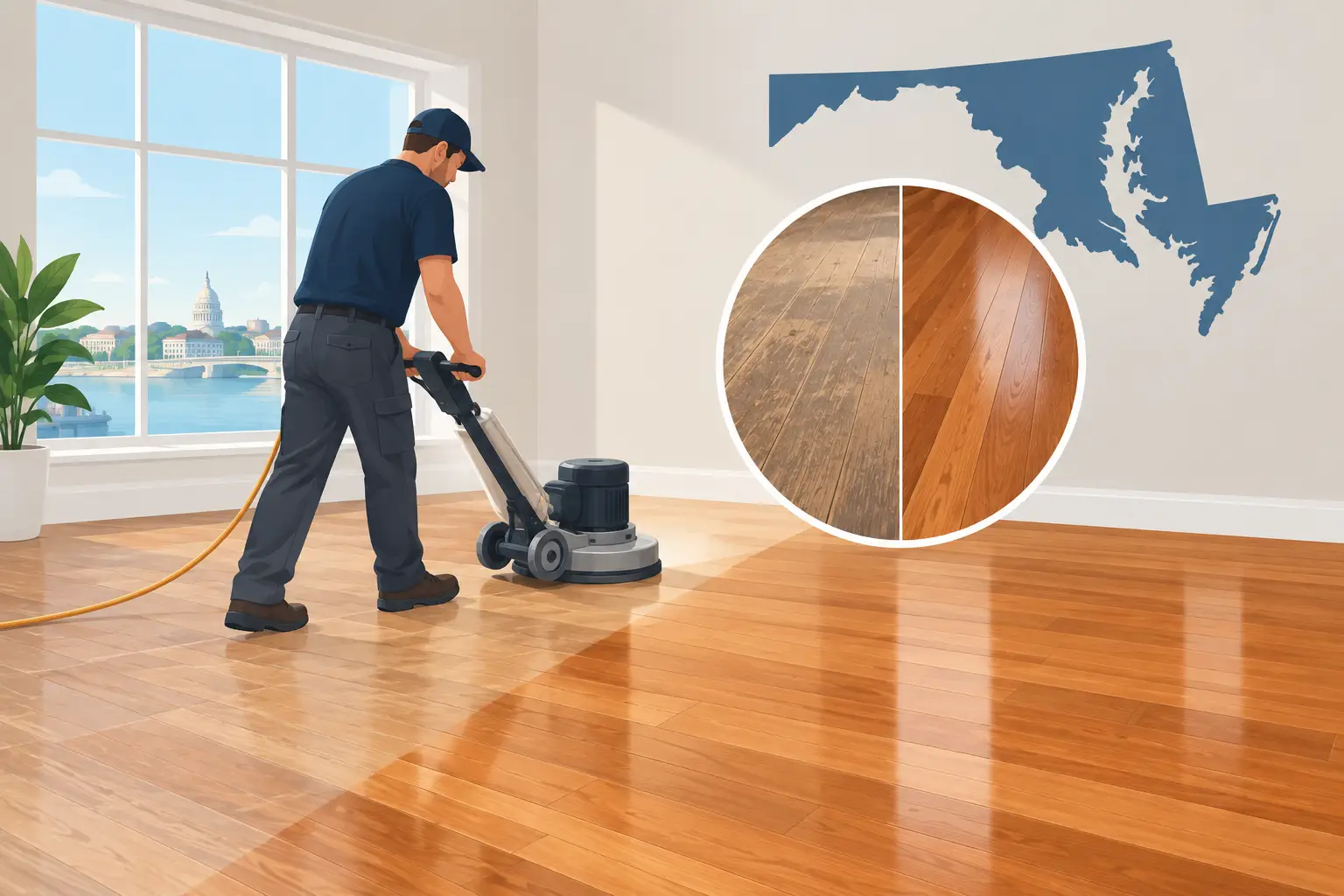
A worn oak floor can make an otherwise well-kept Maryland home feel dated. Scratches around the kitchen, dark traffic lanes in a hallway, a cloudy finish near exterior doors, or orange-toned stain from decades ago can hide the beauty of solid wood. Hardwood floor refinishing Maryland homeowners choose is often the most practical way to restore that beauty without replacing a floor that still has years of service left.
The right project begins with an honest assessment. Some floors need a complete sand-and-finish process. Others can be resurfaced with less aggressive work, while severe water damage, deep staining, movement, or thin remaining wear layers may call for board repair or replacement first. A professional evaluation prevents a cosmetic fix from becoming an expensive disappointment.
When Hardwood Floor Refinishing in Maryland Makes Sense
Refinishing is usually a strong investment when the wood itself is sound but the finish has failed or the appearance no longer fits the home. Solid hardwood can often be refinished multiple times over its life, depending on the thickness of the boards and past sanding history. Historic homes throughout Baltimore, Montgomery County, and Washington, DC commonly have original floors worth preserving, even when they look beyond repair at first glance.
Look closely at the condition of the floor, not just its color. Surface scratches, dullness, minor pet marks, light cupping, and worn finish are often correctable. Deep black water stains, widespread warping, termite damage, or boards that have already been sanded too thin require a more careful plan. Engineered wood also needs evaluation because its hardwood top layer may not be thick enough for a full sanding.
A floor does not have to be damaged to justify refinishing. Many homeowners refinish before listing a property, after removing carpet, or during a larger renovation. Changing from an aging amber finish to a cleaner natural tone, warm walnut, or a custom stain can update the entire room while keeping the character only real wood provides.
What a Professional Refinishing Process Should Include
Quality refinishing is not simply a matter of running a sander over the floor and applying a coat of polyurethane. The lasting result comes from preparation, equipment control, detailed edge work, and a finish system suited to the space.
Assessment and repair before sanding
Before sanding starts, a flooring contractor should identify loose boards, damaged sections, protruding fasteners, gaps, stains, transitions, and areas where the floor meets stairs or built-ins. Repairs should happen before the final sanding sequence. In older Maryland homes, this step may also reveal different wood species, previous patches, or uneven subfloor conditions that affect how the floor accepts stain.
The contractor should discuss whether the goal is restoration, color change, repair, or a combination of all three. That conversation matters because a clear finish over red oak will look very different from a custom color on white oak, maple, or heart pine.
Controlled sanding and detailed preparation
Professional sanding removes the worn finish and levels the surface while preserving as much usable wood as possible. Dustless Bona sanding equipment helps contain airborne dust, which is especially valuable in occupied homes, homes with children or pets, and commercial spaces that need a cleaner work area.
Dust containment does not mean a project produces no dust at all. Fine particles can still travel, and rooms must be prepared properly. Furniture should be removed, adjacent areas protected, and HVAC considerations reviewed before work begins. A contractor who sets clear expectations about site preparation is protecting both the floor and the rest of the property.
Edges, corners, closets, stair treads, and handrails require handwork and specialized attention. These areas often separate an average refinishing job from one that looks consistent from the center of the room to every wall line.
Stain, finish, and cure time
Once the bare wood is prepared, the floor can receive a natural finish, a standard stain, or a custom color. Samples are essential. Wood species, grain variation, existing repairs, lighting, and surrounding paint colors can all change the final appearance. A color that looks balanced in a showroom may read too gray, too red, or too dark in a sunlit Maryland family room.
The protective finish is just as important as the stain. Water-based finishes generally dry faster, keep natural wood lighter, and can have lower odor. Oil-based finishes can offer a warmer, richer appearance and may suit certain restoration projects. Hardwax oils, including systems such as Rubio Monocoat, create a different look and maintenance approach than traditional film-forming finishes. There is no single best option. The right choice depends on appearance, traffic, maintenance preferences, household conditions, and scheduling needs.
Dry-to-touch is not the same as fully cured. Homeowners should receive clear guidance about when they can walk on the floor, replace furniture, add rugs, and resume normal use. Rushing that timeline can leave marks in a finish that was applied correctly.
Choosing a Color That Will Still Feel Right Later
Floor color decisions tend to outlast paint trends. A custom stain gives homeowners more control, but it should be selected with the full room in mind rather than from a small sample alone. Natural and medium tones often show less dust and wear than very dark floors. Pale finishes can make rooms feel open, but they may highlight dark gaps or repairs in older wood.
For historic properties, the best result is not always a dramatic color change. Preserving the natural variation of old oak, pine, or maple can respect the home’s architecture while still delivering a clean, durable finish. If boards include patches from previous repairs, a skilled contractor can use test areas and color adjustment to reduce contrast, though perfectly matching wood of different ages is not always possible.
Commercial properties should place durability and maintenance high on the list. Entry areas, retail spaces, offices, and community buildings may need finishes chosen for heavier traffic, practical recoating schedules, and limited downtime. A beautiful finish that cannot fit the operating schedule is not the right finish for the job.
How to Plan for Cost, Timing, and Disruption
The cost of refinishing is influenced by square footage, floor condition, species, layout, repair needs, stain selection, stairs, furniture moving, and the chosen finish system. An open rectangular room is very different from a multi-level home with detailed trim, closets, staircases, water damage, and extensive edge work.
Be cautious with estimates based only on a broad square-foot price. They can be useful as an early budget range, but a reliable proposal follows an on-site review or thorough photo assessment. It should explain what is included, identify likely repair allowances, and clarify whether stain samples, final coats, transitions, and cleanup are part of the scope.
Scheduling also deserves attention. A refinishing project affects room access for several days, and cure time extends beyond the final coat. Plan where household members, pets, furniture, and daily routines will go during the work. For commercial projects, phased work or off-hours scheduling may reduce interruption, but it must be coordinated with finish cure requirements.
Why Experience Shows in the Details
Hardwood floors are unforgiving of shortcuts. Poor sanding can leave chatter marks, uneven sheen, visible drum lines, or stain blotchiness. Weak preparation can cause finish adhesion problems. Rushed edge work can leave a room looking unfinished even when the center floor appears acceptable.
Choose a contractor who can explain the proposed process in plain language, show how they handle repairs and dust control, and discuss product options without pushing a one-size-fits-all answer. Trade credentials, manufacturer training, and years of hands-on work matter because they support better decisions when a floor has hidden complications.
Refinish My Floors, LLC brings 30 years of flooring-industry experience to projects across Maryland and Washington, DC, combining detailed craftsmanship with tools that make the process easier to follow. Homeowners can use photo-based quoting, project tracking, damage scanning, and floor-preview technology to make decisions with more visibility from the start.
Your floors do not need to look new to be worth saving. With a careful evaluation, the right repair strategy, and a finish selected for the way you actually live, worn hardwood can become one of the most durable and distinctive features in your home again.

