
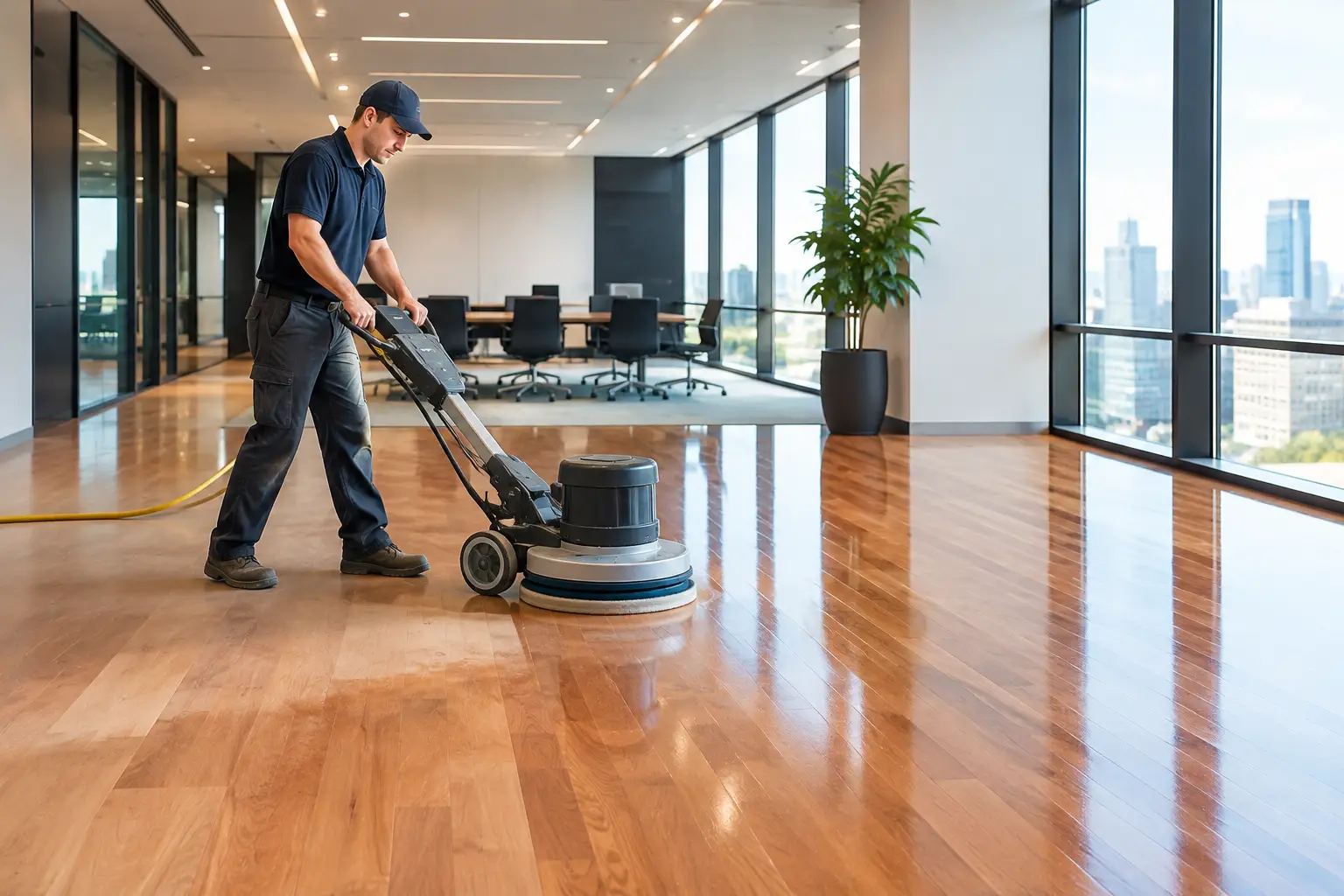
A worn wood floor changes the way a commercial space feels before a customer, tenant, or employee has read a sign. Traffic lanes dull, finish wears through near entrances, and old stain can make an otherwise well-maintained property look neglected. Commercial hardwood floor refinishing is the practical way to restore that first impression while protecting the wood beneath it – but success depends on more than renting a sander and choosing a new sheen.
For offices, retail spaces, restaurants, community buildings, and historic properties, the work must balance appearance, durability, indoor conditions, and business continuity. The right plan preserves usable flooring where possible, corrects problems that sanding alone cannot solve, and puts the space back into service on a realistic schedule.
What Commercial Hardwood Floor Refinishing Really Involves
Refinishing is a full restoration process, not simply a fresh coat of polyurethane. A professional crew begins by evaluating the wood species, board condition, remaining wear layer, existing finish, previous repairs, moisture exposure, and the demands of the space. That evaluation determines whether the floor can be screened and recoated, needs complete sanding, requires board repairs, or has reached the point where replacement is the better investment.
A complete refinishing project generally includes preparation, repair, sanding, edge work, detail sanding, stain or color matching when requested, and multiple finish coats. Each stage affects the final result. Skipping careful prep may leave contamination in the floor. Rushing sanding can create unevenness or visible machine marks. Applying finish before the wood is properly prepared can limit adhesion and shorten the life of the work.
Commercial floors also present details that are less common in a home. There may be fixed fixtures, heavy shelving, rolling equipment, wide entryways, transitions to tile or carpet, and long traffic paths that require particular attention. A reliable contractor plans for these conditions before work begins rather than treating them as surprises during the project.
Start With the Right Scope of Work
The most cost-effective solution is not always full sanding. If a floor has light surface scratches, a cloudy appearance, or worn sheen but no bare wood, a screen-and-recoat may restore protection with less disruption. This process lightly abrades the existing compatible finish and applies new coats over it. It is faster and removes far less wood than a full refinish.
Full sanding is typically the better choice when the finish has worn through, stain is uneven, deep scratches are visible, boards have water marks, or the customer wants a color change. It is also needed when old coatings are failing or when previous maintenance products have created adhesion concerns. Wax, silicone-based cleaners, and certain polishes can interfere with a new finish, so honest information about past cleaning practices is useful during the evaluation.
Not every floor is a candidate for refinishing. Engineered hardwood can be refinished only if the wear layer is thick enough. Flooring damaged by prolonged water intrusion may have cupping, crowning, stains, or weakened fasteners that require repairs first. In some cases, selective board replacement followed by custom stain blending produces a better result than trying to sand away a problem that runs too deep.
The Value of an On-Site Assessment
Photos are useful for an early estimate, especially when a property manager needs to compare options quickly. But an on-site assessment remains the best way to identify loose boards, moisture-related movement, damaged transitions, and finish compatibility. It also allows the contractor to measure access points, discuss furniture or equipment removal, and establish a schedule that respects the needs of the business.
At Refinish My Floors, planning is built around the actual condition of the wood and the operation of the property. That means recommending the level of work the floor needs, not automatically selling the largest project.
Plan Downtime Before the Sanders Arrive
The biggest concern for many commercial clients is not the flooring itself. It is downtime. A thoughtful schedule can make refinishing manageable, even in active buildings.
The timeline depends on square footage, floor condition, repair needs, stain selection, ventilation, humidity, and the finish system selected. Sanding may move quickly in an open room, while detailed work around stairs, built-ins, thresholds, or intricate floor borders takes longer. Dark stains and custom colors can add time because they require careful testing and even application. Finish coats also need adequate cure time before foot traffic, furniture, rolling loads, or area rugs are introduced.
For occupied properties, work may be phased by suite, room, or floor level. Retailers may prefer evening or closed-day scheduling. Offices may coordinate work around holidays or lower-occupancy periods. The goal is not to promise an unrealistically fast turnaround. It is to create a clear sequence so that staff, tenants, and vendors know what areas will be inaccessible and when they can safely return.
Dust containment is another essential part of planning. Professional dustless sanding equipment captures a substantial amount of sanding dust at the source, helping protect adjacent spaces and simplifying cleanup. It does not eliminate the need to protect furnishings, vents, and work areas, but it is a major improvement over outdated open sanding methods. For commercial settings where cleanliness and air quality matter, that preparation is part of the workmanship.
Choose a Finish for How the Space Is Used
The finish should be selected for performance first and appearance second. A lobby with constant foot traffic has different needs than a private conference room. A restaurant may face spills and frequent cleaning. A historic office may require a finish that preserves the warmth and character of older boards without making them look overly glossy or plastic-coated.
Water-based finishes generally offer lower odor, faster drying, and a clear appearance that resists ambering over time. They are often a strong choice when a project needs a shorter interruption and a clean, contemporary look. Oil-based finishes can provide a warmer tone and traditional appearance, but they usually require longer drying times and may deepen in color as they age.
Sheen also deserves more attention than it gets. High gloss reflects light dramatically but shows scuffs, dust, and scratches more readily. Satin and matte finishes are often more practical for high-use commercial spaces because they reduce visible wear while still presenting a refined surface. The right answer depends on lighting, maintenance expectations, brand image, and the condition of the wood.
Color Changes Need Sample Boards
A custom stain can update an outdated orange tone, align the floor with a renovation, or help newly repaired boards blend into surrounding wood. But stain is not paint. Oak, maple, pine, walnut, and older reclaimed boards accept color differently. Existing age, sunlight exposure, and prior repairs can also affect the result.
Testing stain samples directly on the floor or on matching boards gives decision-makers a far more accurate view than a small store sample. Review samples under the room’s natural and artificial light, and view them beside walls, millwork, furniture, and signage before approving a color. This step takes a little patience, but it prevents expensive disappointment.
Protect the Investment After Refinishing
A newly refinished commercial wood floor can last for years when maintenance matches the finish and the level of traffic. The most useful protection is simple: keep grit off the floor, address spills promptly, and use entry mats that trap dirt without rubber or vinyl backings that can discolor finishes.
Daily dry dust mopping removes abrasive particles that act like sandpaper under shoes and chair legs. Use cleaning products specifically approved for the finish system, and avoid excess water, steam mops, waxes, oil soaps, and abrasive pads. Felt protectors on movable furniture and protective pads beneath equipment help prevent concentrated damage. In busy zones, a planned maintenance recoating can renew protection before foot traffic reaches bare wood.
Property managers should also watch for changes rather than waiting for obvious failure. Dull traffic lanes, peeling finish, repeated moisture exposure, gaps that change with the seasons, and black staining around entry doors all deserve early attention. Addressing a small issue can preserve the option of recoating instead of requiring more extensive sanding and repair.
A commercial floor does not need to look new every day to look professional. It needs to be clean, protected, stable, and finished with care that fits the way the space is actually used. With a detailed evaluation, a realistic downtime plan, and the right finish system, refinishing can extend the life of valuable hardwood while giving the entire property a more polished, confident presence.

